Tourism market · Strategy
Quality over volume, and a push north
Government policy on tourism has been consistent for several years: fewer, higher-spending visitors, a longer season, and more of the activity outside the coast. A new ten-year strategy is being drafted. For investors, the direction matters more than the document: it tells you which projects will find support.
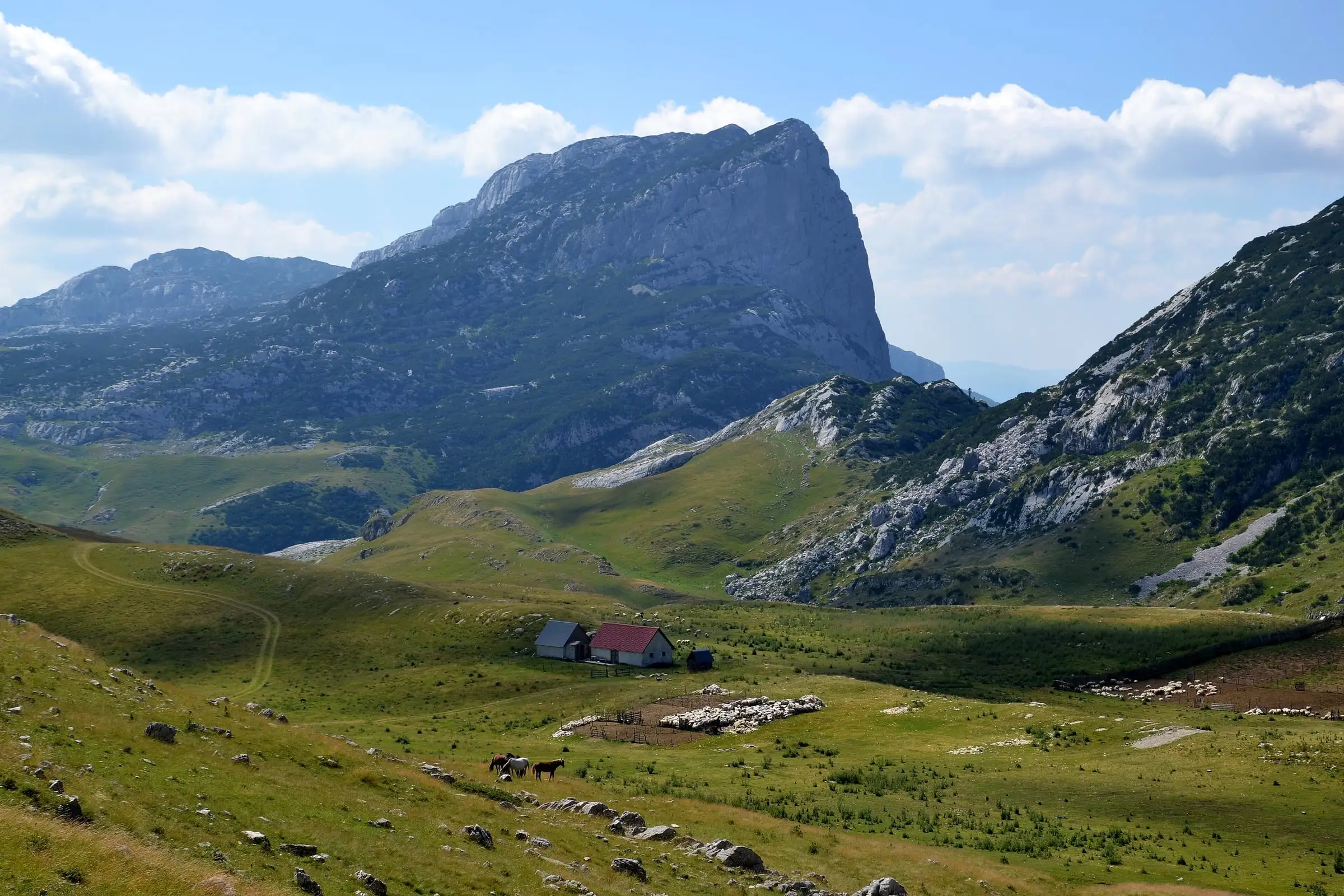
Durmitor National Park
5
National parks
5
Nature parks
78
Protected areas
13.35%
Share of land territory protected
The 2022–2025 strategy: quality over quantity
The Government adopted the Tourism Development Strategy 2022–2025 in March 2022, as the sector came out of the pandemic. Its central idea was to raise the quality of the offer rather than the number of visitors: better accommodation, more authentic experiences, and less reliance on crowded summer beaches. It paired that with commitments to sustainability, to conserving cultural heritage, and to giving local communities a real role in how tourism develops.
The orientation shows in the market. The categorised hotel stock is weighted to four and five stars, the incentive schemes reward high-category hotels, and international luxury brands have kept arriving. The less visible half, community involvement and conservation, is what an investor meets at the planning stage, through public consultation and the conditions attached to permits.
What the evaluation found
The 2022–2025 cycle has now expired, and an external evaluation has been completed. It found that the strategy's areas and objectives all remain relevant, so the new strategy is likely to build on them rather than change direction. Its recommendations were about delivery: local governments should be more involved, public institutions need more capacity, and the managers of protected areas should be brought into tourism planning.
Each of those points has a practical meaning for developers. Municipalities will have more say over projects in their territory, so early engagement with the local council is worth the time. Institutional capacity is a polite way of saying that approvals can be slow, and the guide itself names administrative efficiency as a constraint; build that into the timetable. And protected-area managers will have a stronger voice on projects in or near national and nature parks, which matters most in the north.
The 2027–2036 strategy and its priorities
The Government has started work on a ten-year Tourism Development Strategy for 2027 to 2036. The guide lists its intended priorities:
- Season extension beyond the June–September coastal peak.
- Mountain and inland tourism: adventure, eco-tourism, rural tourism and winter sports.
- MICE: meetings, incentives, conferences and events.
- Wellness and health tourism.
- Nautical tourism.
Running across all of them is regional diversification: steering investment toward the north. The state supports this with annual incentive programmes that fund local events, rural households, innovative tourism projects, digitalisation and small operators. These are small grants aimed at local businesses, not at hotel developers. The larger tools for a hotel investor are the land, tax and partnership instruments described in our instruments section.
Note the gap in the calendar. The old strategy ended in 2025 and the new one starts in 2027, so 2026 is a transition year. Read the published strategy when it appears, and check that a project you are considering fits its final wording, not just the draft priorities.
Nature as the product base
Diversification away from the beach depends on Montenegro's mountains, rivers and lakes. The country has 5 national parks: Durmitor, Biogradska Gora, Lovćen, Skadar Lake and Prokletije. It also has 5 nature parks: Piva, Komovi, Orjen, Dragišnica and Komarnica, and the Zeta River. In all, 78 protected areas cover 13.35% of the land territory and 1.79% of the marine area.
These places support rafting on the Tara, multi-day trekking, birdwatching on Skadar Lake, canyoning, via ferrata routes and paragliding. That is the activity menu a northern hotel will sell, and much of it runs from late spring to early autumn. Winter sports fill the gap that remains.
Protection is both the asset and the constraint. Guests come for landscapes that are protected precisely so that they stay largely unbuilt. Building in or near a park means stricter rules, more consultation and closer environmental review. Check the protection status of any site, and its buffer zone, early in due diligence.
The Smart Specialisation Strategy
Tourism also features in Montenegro's innovation policy. The Smart Specialisation Strategy 2026–2031 names innovative, regenerative and sustainable tourism as a priority domain. That gives the Innovation Fund a policy basis to co-finance technology adoption in tourism businesses, such as booking and revenue systems, energy management or digital guest services. The guide gives no budget for this support, so treat it as a possible top-up for an operator with a credible digital or sustainability plan, not as part of the core financing.
On the skills side, 5 university faculties teach tourism and hospitality, among them the Faculty of Tourism and Hospitality in Kotor. They supply graduates for management roles, but the guide also lists labour shortages among the market's constraints, so graduates alone will not staff a large resort. See infrastructure and innovation for the wider picture.