Instruments
Incentives and land routes for hotel investors
Montenegro has no single investment scheme. It has a handful of tools, each solving one problem for a hotel developer: tax, land, an exit and staff costs. Read together, they reward quality and steer new capital away from the coast.
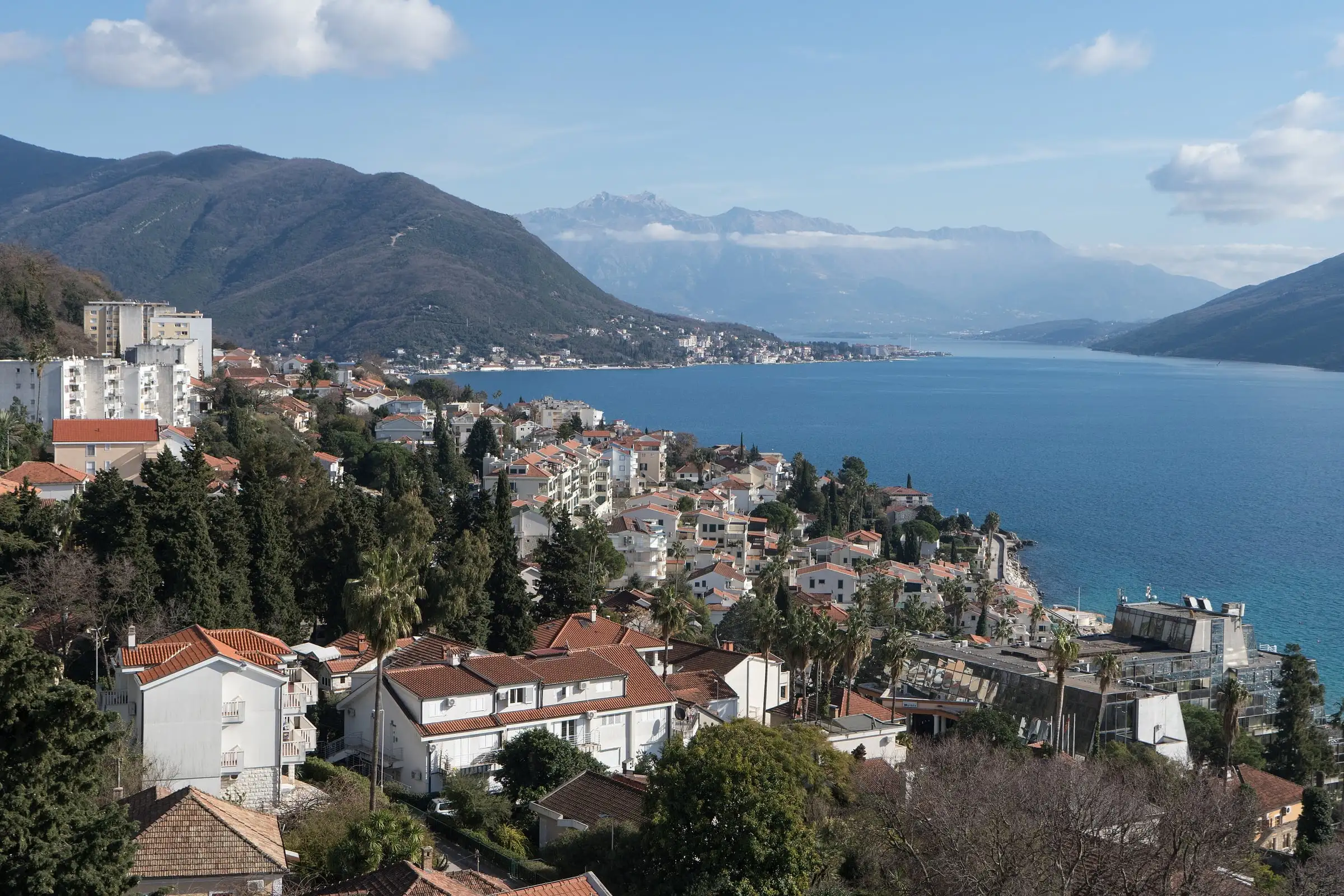
Herceg Novi
15%
VAT on accommodation and food service
up to 70%
Property tax reduction, 5-star hotels in priority locations
€3 million
Minimum investment in a Tourism Development Zone
86.49%
Coastal region share of beds
How the pieces fit together
Start with tax, which rewards quality more than volume. Every hotel and restaurant charges VAT at 15% on rooms and most food, against a standard rate of 21%. Above that, the reliefs rise with the star rating. A four-star hotel in a priority tourist location can have its annual property tax cut by up to 30%, a five-star hotel by up to 70%, and a five-star build pays no import VAT on construction supplies and no municipal construction contributions.
Land is the second lever, and here the policy is about geography. Tourism Development Zones let an investor propose a project on state land in the northern or central region and receive the land on a long-term lease, provided the site covers at least one hectare, the investment reaches €3 million and the scheme delivers at least 50 units of four stars or more. The coast and the Capital City are left out on purpose: the coast already holds 86.49% of the country's beds, and the state wants the next wave of hotels in the mountains.
Third comes the exit. The condo-hotel model lets the owner of a high-category hotel sell individual units while the building keeps one operator and one categorisation. The bar is five stars on the coast and in the Capital City but four stars in the north and centre, another nudge inland.
Fourth is access to the public land that most open sites sit on. Long-term lease is the default. A public-private partnership is possible only when a project carries a genuine public-interest element, and a concession only where the law requires one, typically for the Maritime Domain or commercial berths. Business zones and direct investment incentives complete the set: payroll relief for new hires in designated zones, and an annual programme of cash support.
In practice the instruments stack. A four-star lodge in a northern zone can hold leased state land, charge the reduced VAT rate, claim property tax relief if its location is a priority one, and sell part of its units as condo-hotel stock. Each page below sets out the rules, the procedure where the guide gives one, and what to check before building the instrument into a financial model. None of it is tax or legal advice.
The six instruments
Property tax rules; Law on Spatial Planning (2025); VAT law
Tax incentives for high-category hotels
Lower property tax for four- and five-star hotels in priority tourist locations, extra relief for five-star construction, and a reduced VAT rate on accommodation and food service.
Applies to Four- and five-star hotels; all accommodation and F&B for the VAT rate
Law on Tourism and Hospitality
Tourism Development Zones
An investor-initiated route to long-term use of state land in the north and centre of the country for larger, high-category accommodation projects.
Applies to Hotel and resort projects on state-owned land outside the coast and the Capital City
Law on Tourism and Hospitality
Condo-hotel model
Lets owners of high-category hotels sell individual units while the property keeps one operator and its star category, giving investors a partial exit.
Applies to High-category hotels
State-property framework; Law on Public-Private Partnership; Maritime Domain rules
Long-term lease, PPP and concessions
The ways public land in the opportunity portfolio is made available: mostly long-term lease, with PPPs and concessions reserved for projects that serve a public purpose or use the sea front.
Applies to State-owned and municipal sites in chapter 6.3
Regulation on Business Zones
Business zones
Designated zones where employers can hire without paying social security contributions and personal income tax on those jobs for up to five years.
Applies to Employers hiring inside a designated business zone
Regulation on Incentives for Direct Investments; Smart Specialisation Strategy 2026–2031
Direct investment incentives
Annual cash support for qualifying investors, plus Innovation Fund grants for tourism digitalisation projects.
Applies to Companies, entrepreneurs and natural persons that meet the eligibility criteria
Which instruments fit your project?
We collect the planning documents, parcel data and the right contacts at the Ministry of Tourism, the Montenegrin Investment Agency and the municipality, and run those conversations in parallel with you.
We reply within one business day. Prefer email? Write to hello@montenegroinvest.com.