Why Montenegro · FDI
Foreign capital per resident is the highest in the Western Balkans
For a country of 623,600 people, Montenegro draws an unusual amount of foreign money, much of it into coastal property and hotels. That record is the strongest evidence that international capital can be deployed here at scale.
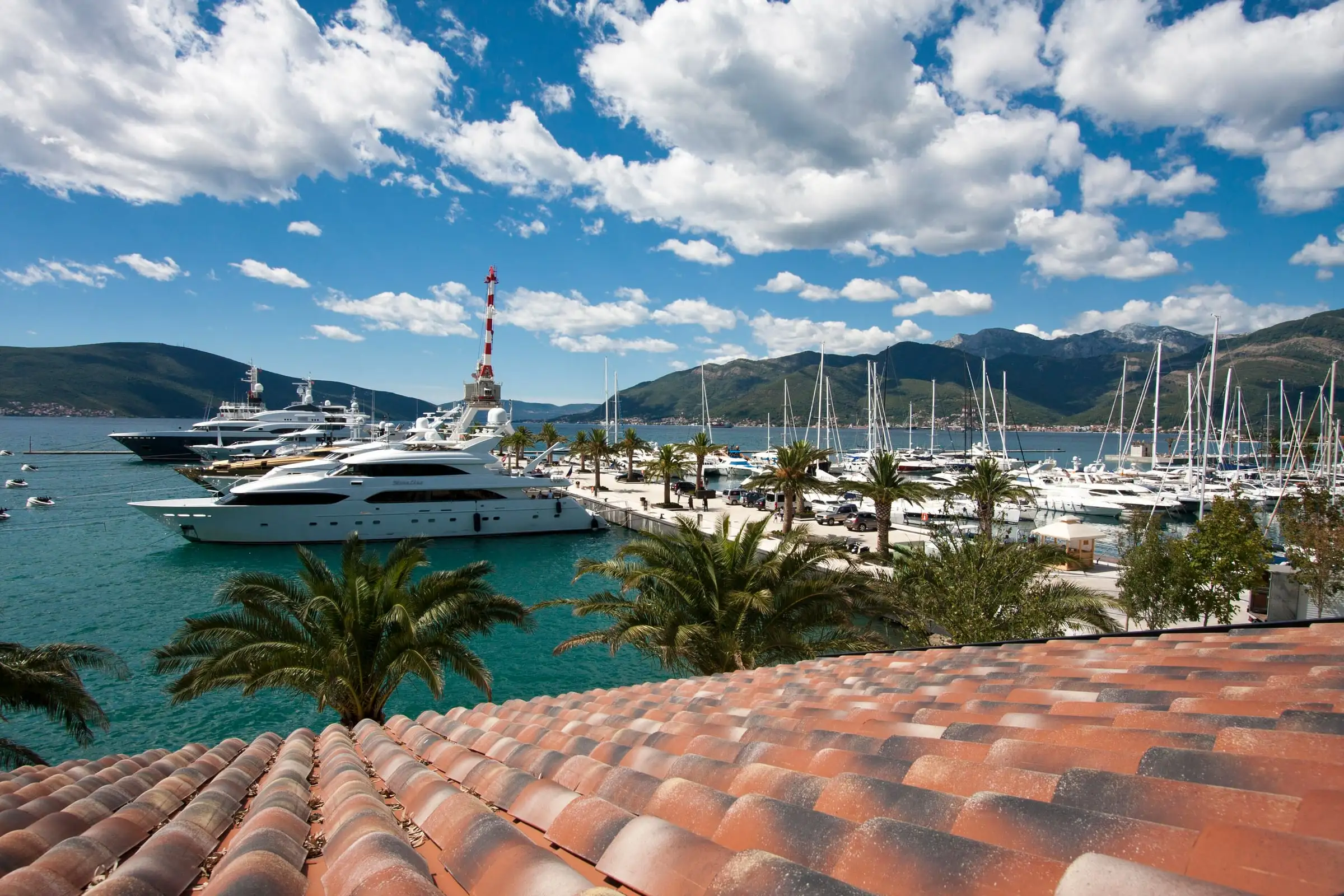
Porto Montenegro, Tivat
€4.85bn
Cumulative FDI inflows
about €7,800
FDI per resident
$8.2bn
Inward FDI stock
51%
Share of gross FDI going to real estate
A billion euros a year, give or take
Between 2021 and 2025, foreign investors put €4.85bn into Montenegro. Inflows passed the billion-euro mark twice, in 2022 (€1.15bn) and again in 2025 (€1.02bn), and stayed in a narrow band in the years between. Spread over the population, that is about €7,800 per resident, well ahead of the other Western Balkan economies.
The regional picture helps explain why. Across the Western Balkans, FDI inflows ran at more than 6% of GDP in 2025, roughly four times the EU average relative to the size of the economies, driven by the prospect of EU membership, companies moving production closer to Europe, and tourism and property. Montenegro has the highest intensity of the group.
FDI Inflows to Montenegro, 2021–2025
Show the data
| Year | FDI inflows (EUR million) |
|---|---|
| 2021 | 928.1 |
| 2022 | 1,151.7 |
| 2023 | 862.3 |
| 2024 | 891.1 |
| 2025 | 1,018 |
Figure 3.1, FDI Inflows to Montenegro, 2021–2025 (UN Tourism, 2026, p. 44). Underlying source: Montenegrin Investment Agency, unpublished administrative data supplied to UN Tourism, May 2026
Who invests
Capital arrives from more than 60 countries, but it is concentrated: the ten largest sources account for 68.3% of the total. Neighbouring Serbia leads, followed by Russia, Türkiye, Switzerland and Germany, with the United States and the United Arab Emirates also in the top ten.
Treat the country split with care. It records the immediate investor registered with the Montenegrin Investment Agency, not the ultimate owner, so money routed through holding companies in places like Cyprus is counted there.
Top 10 Source Countries of FDI, 2021–2025 (cumulative share)
Show the data
| Rank | Country | Share (%) |
|---|---|---|
| 1 | Serbia | 12.33 |
| 2 | Russian Federation | 11.66 |
| 3 | Türkiye | 9.12 |
| 4 | Switzerland | 7.43 |
| 5 | Germany | 7.22 |
| 6 | United States | 5.28 |
| 7 | United Arab Emirates | 5.2 |
| 8 | Cyprus | 4.06 |
| 9 | Italy | 3.48 |
| 10 | Austria | 2.48 |
| — | Other countries | 31.74 |
Figure 3.2, Top 10 Source Countries of FDI, 2021–2025 (cumulative share) (UN Tourism, 2026, p. 45). Underlying source: Montenegrin Investment Agency, unpublished administrative data supplied to UN Tourism, May 2026.
Where it goes
Property dominates. In 2024, 51% of gross FDI went into real estate, reflecting demand for Adriatic coastal homes and resort developments. The inward stock of foreign investment reached $8.2bn at the end of 2025, up from $4.23bn in 2010.
For a hotel investor, that concentration cuts both ways. It shows the market works: land can be leased, projects financed and branded residences sold to international buyers. It also means the coast is where competition for sites and staff is fiercest, which is one reason the state is steering new projects north.
Help on the ground
The Montenegrin Investment Agency handles pre-investment advice, introductions to the authorities and aftercare, and approves public-private partnership proposals. Its EU-funded Accelerating Investment in Montenegro project is building that capacity further. At its 2025 investment conference in LušticaBay, the Government reported over €3bn of energy and infrastructure projects under way.
Institutional lenders already active in the country include the EBRD and the World Bank Group, alongside the Ministry of Tourism, the National Tourism Organisation and the Chamber of Commerce.