Tourism market · Accommodation
An upmarket hotel stock, almost all of it on the coast
The categorised hotel stock is small, skewed toward four and five stars, and packed onto the coast. The north, where the state is building ski resorts and most national parks sit, holds under 6% of the beds. That imbalance is the starting point for most of the opportunities on this site.
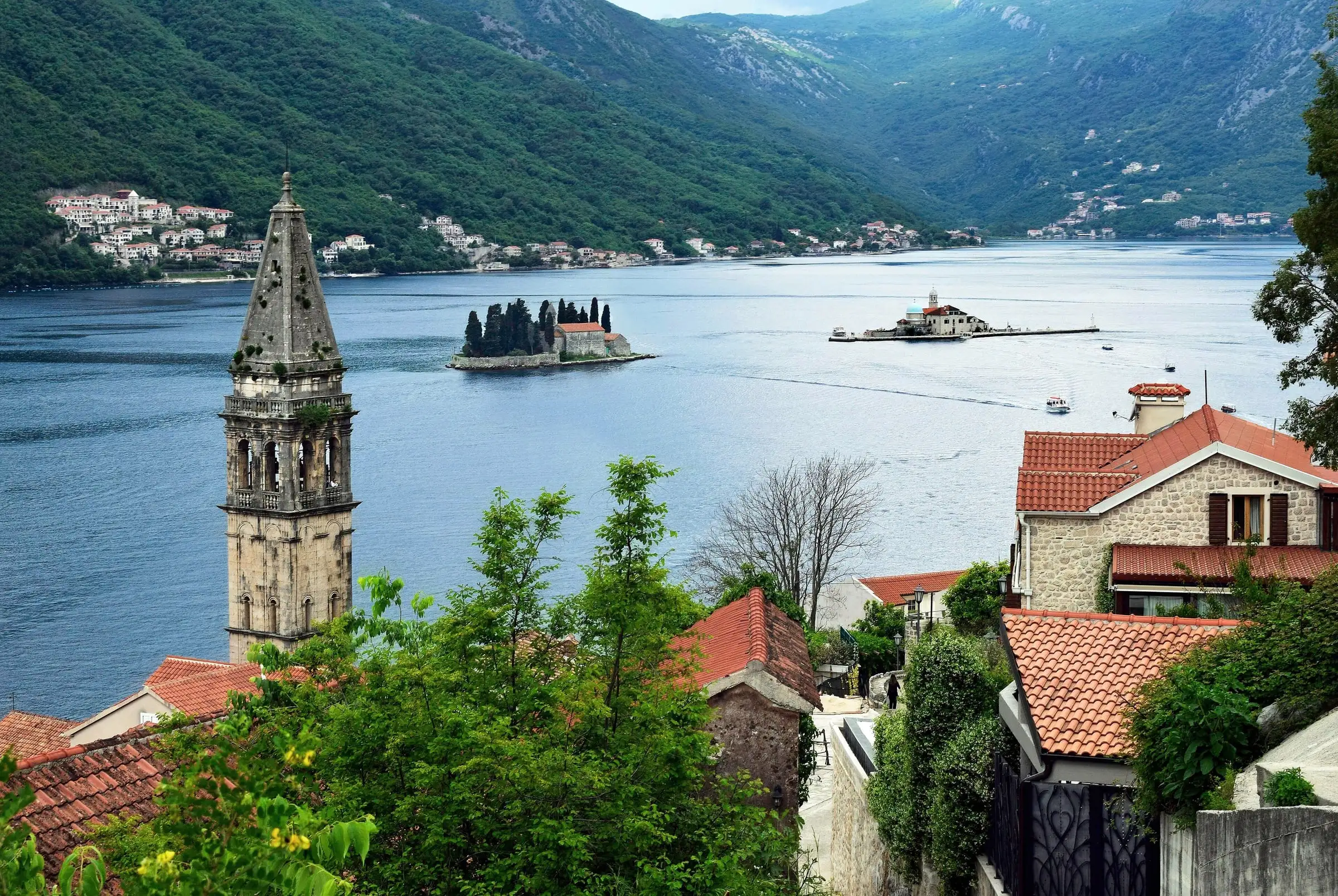
Perast
535
Categorised accommodation establishments
52,397
Beds
56.27%
Four-star share of beds
86.49%
Coastal region share of beds
What the official stock counts
The Ministry of Tourism's preliminary register, dated May 2026, lists 535 categorised establishments with 18,853 rooms, 4,414 apartments and 52,397 beds. These are hotels and similar properties that the Ministry categorises and supervises. The count leaves out the large private-rental sector of rooms and holiday apartments, which the statistics office records separately and which likely absorbs a large part of regional summer demand.
Keep that boundary in mind when you compare figures. The categorised stock is the competition a new hotel faces for international, brand-loyal and group business. The private-rental sector is the competition for price-sensitive families, and it can cap what mid-market hotels can charge in high summer.
Beds by star rating, May 2026
Show the data
| Category (stars) | Establishments | Rooms | Apartments | Beds | % of beds (%) |
|---|---|---|---|---|---|
| 5 | 43 | 2,102 | 839 | 6,357 | 12.13 |
| 4 | 253 | 10,567 | 2,624 | 29,489 | 56.27 |
| 3 | 177 | 4,049 | 713 | 10,760 | 20.53 |
| 2 | 54 | 1,992 | 237 | 5,400 | 10.3 |
| 1 | 8 | 143 | 1 | 391 | 0.74 |
| Total | 535 | 18,853 | 4,414 | 52,397 | 99.98 |
Table 4.1, Accommodation Establishments by Category, Montenegro (latest available year) (UN Tourism, 2026, p. 54). Underlying source: Preliminary data of the Ministry of Tourism of Montenegro for the establishments under its responsibility (May, 2026).
Weighted toward four and five stars
The stock leans heavily upmarket. Four-star properties make up 47.29% of establishments and 56.27% of beds. Five-star properties make up 8.04% of establishments and 12.13% of beds. Together the two top categories hold more than two-thirds of all categorised beds, and the one- and two-star tiers are close to negligible.
Because each top category's share of beds is larger than its share of establishments, four- and five-star hotels are on average bigger than the rest. That fits a market shaped by resort developments and international brands rather than family-run guesthouses, which mostly sit outside the categorised register.
Two readings follow. The positive one is that the premium positioning is real: the country has the hotel product to serve high-spending guests, and the hotel performance data show it charging for it. The cautious one is that the four-star tier is crowded. A new four-star coastal hotel competes with many similar properties for the same summer guest, which is one reason the incentives are aimed at the very top of the market and at locations away from the existing clusters.
The coast holds almost everything
The coastal region has 76.26% of categorised establishments and 86.49% of beds. The northern region, home to the mountain resorts now under construction and most of the national parks, has 11.77% of establishments but under 6% of beds. Its hotels are few and small. The central region, which includes the capital, Podgorica, accounts for the remainder.
The guide calls this regional split the core of the investment thesis, and the state's own spending agrees. It has budgeted €209.5M for the state ski resorts in the north, and the Tourism Development Zone and property-tax incentives favour new high-category hotels in priority locations. The aim is to put hotel beds where the lifts, roads and national parks are, so that the north can carry a second season.
A thin layer of tourist agencies in the north
Hotels are only one part of a destination. Of 285 licensed tourist agencies in Montenegro, 23 operate in the northern region. Agencies are the businesses that sell packages, arrange transfers, run excursions and bring in groups from foreign tour operators. Where they are scarce, a hotel has to do that work itself.
For a northern project that means budgeting for distribution and guest experiences that a coastal hotel can buy in: transfers from Podgorica, guided activities in the national parks, ski packages, relationships with foreign operators. It also points to a smaller, separate opportunity in destination management and activity businesses that can serve several hotels at once.
What the gap means for investors
On the coast, the market is proven but crowded. Sites are scarce and expensive, staff are hard to find in summer, and the upper tiers already have several international brands. A new coastal project needs a clear edge, such as a marina, a first-rate site or a brand not yet present, and a plan for the shoulder months.
In the north, the market is open but unproven. There is little competing stock, land is available on long-term lease, and the state is paying for the base infrastructure. The risks are demand that does not yet exist at scale, a short track record of winter tourism, and the thin service layer described above. The fair way to read the regional numbers is not that the north is underserved and therefore attractive, but that it is a bet on public infrastructure delivering on time. See the Tourism Development Zones and the open opportunities for the projects on offer.